
20,000 Miles
560 Days
23 Countries
3 Continents
an expedition to


A solo journey by bicycle from Lisbon to Labrador. Starting at the farthest West point of Europe and going to the farthest East point in North America. From the Atlantic ocean in Portugal, the trip will skirt the Mediterranean, Black, and Caspian seas. The route then crosses steep mountain ranges and through the vast open steppes of Central Asia. The most difficult challenge will be heading into the uninhabited reaches of Siberia and Alaska in winter. The path then crosses the interior of Canada before finally ending back on the shores of the Atlantic. An epic human powered journey to connect the people of the world using the power of the bicycle.
Date: May 15th, 2016
Distance: 92 km
Song of the Day: Corduroy - Pearl Jam
I woke up this morning to cows. A family was herding them by our campsite. Cows seem clumsy, but they do try and avoid things like tents, thankfully. After that, more people arrived with bread, wanting to take pictures with and of us. I am not sure what to do with all the bread. I am very grateful for it, and it seems rude to refuse it, but I don't think Arthur and I will be able to eat seven rounds of bread before it starts to mold. It wasn't a bad breakfast, though. Mmmm, fresh bread.
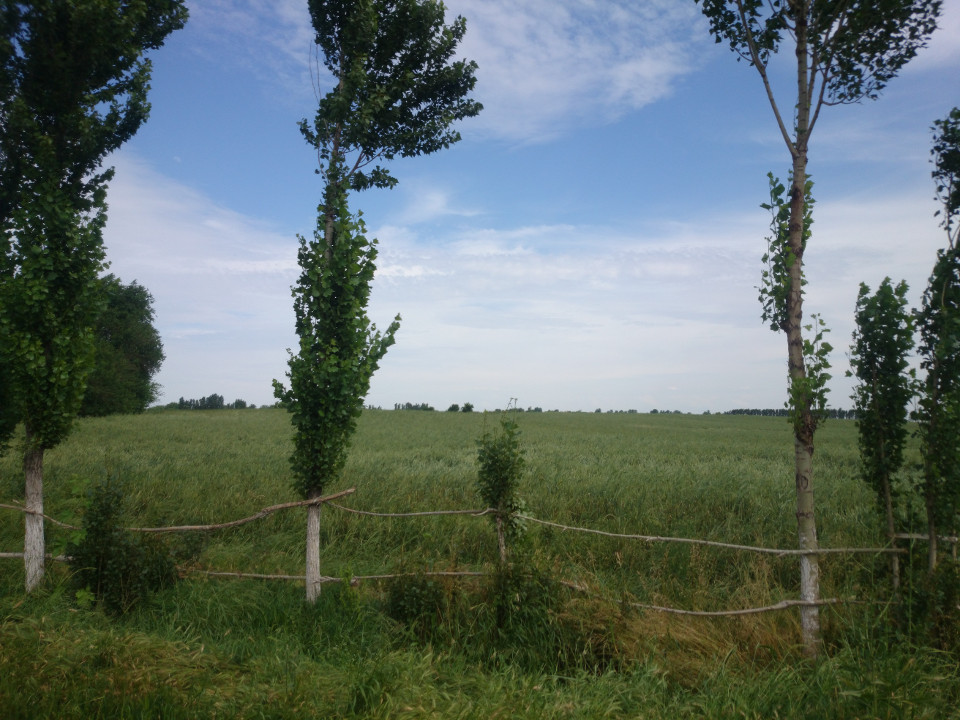 Other than that, the day was slow. I think it was the worst headwind I've had since Serbia, so it was slow and taxing. With the open farmland around, the miles just seemed to inch by. Halfway through the day the land started to change a bit. Instead of everything perfectly flat it became long rolling hills. Tough day. I was happy to see the outskirts of Tashkent when we arrived.
 -Dravis
Date: May 14th, 2016
Distance: 132 km
Song of the Day: Feed the Fever - Lost Lander
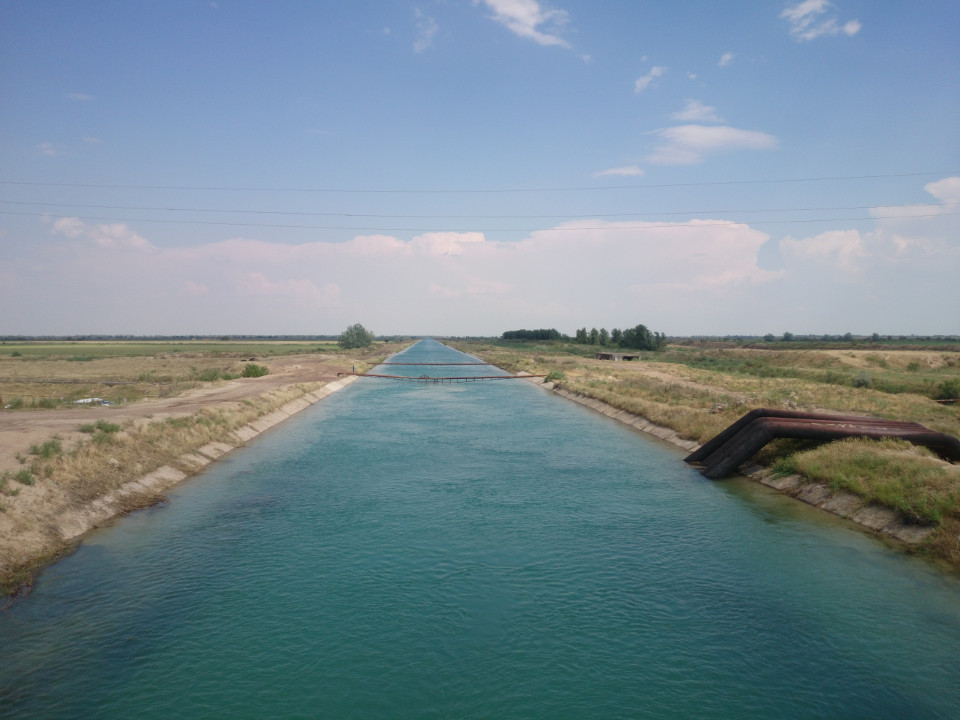 This morning was a breeze, both literally and figuratively. A strong tail wind propelled Arthur and me out of Jizzax. I was doing over 40 kph for a little stretch, it was so strong. It didn't last, but that is okay. The wind died down and the road changed direction. We were still making pretty good time, just not amazing. I thought after the hills in Jizzax that we would be going to hit some more elevation, but I was wrong. Things continued to be remarkably flat throughout the day. Lots of canals and small farms.
The road to Tashkent used to head straight from Jizzax into the capital. Now that road cuts through a little piece of Kazakhstan. When the road was built during the Soviet period, it wasn't a problem. Now it means all the hassles of crossing a border twice. None of the regular traffic does this, so the main road now swings around the bulge in the boundary to avoid Kazakhstan. And that is just one of the many border irregularities here. If you took a straight line from that little piece of Kazakhstan, you could go through Uzbekistan, Tajikistan, and end up in Kyrgyzstan, less than 80 kilometers away from where you started. Often, these borders were intentionally set by Stalin to divide communities. This was to ensure that no one ethnic group had too much control over an area. The problem is that these borders are still causing issues today. There are sporadic bouts of ethnic violence as well as difficulties with travel and international trade. It is amazing that even 60 years after his death Stalin is still creating problems.
Arthur and I stopped at a little bazaar in Baxt to pick up some supplies. It was crazy how much attention we received for this. We were just buying some chicken and vegetables to make dinner, but the people in the market crowded around us. Of course they wanted to know everything about us. "Where are you from? Where are you going?" Some questions I get, some I don't. It was somewhat of a relief to be out of there.
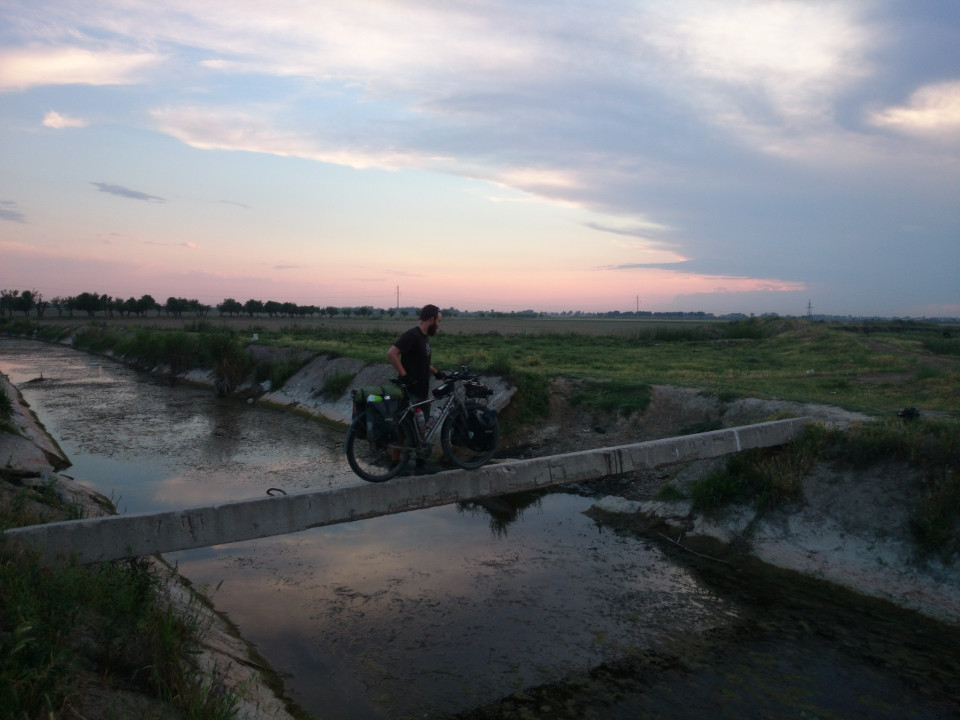 We found a place not far down the road where we could camp. The place was a bit difficult to get to, as you had to cross the canal over a narrow concrete girder. I thought it would be enough out of the way people might not notice us, but they did. Most of the evening we had a steady stream of guests coming by. None of them were upset about us camping there, mind you, instead they wanted to provide us with bread and sweets. It was really very kind of them. Arthur cooked dinner and we talked about various camping trips we had done.
 -Dravis
Date: May 13th, 2016
Distance: 116 km
Song of the Day: Black Hole Sun - Soundgarden
Well, one more flat day in Uzbekistan. Not much to see other than farm fields, so just another long, hot day under the sun. Although, just outside of town things did get a bit more visually interesting. We were riding through an area of hills and cliffs. Very pretty.
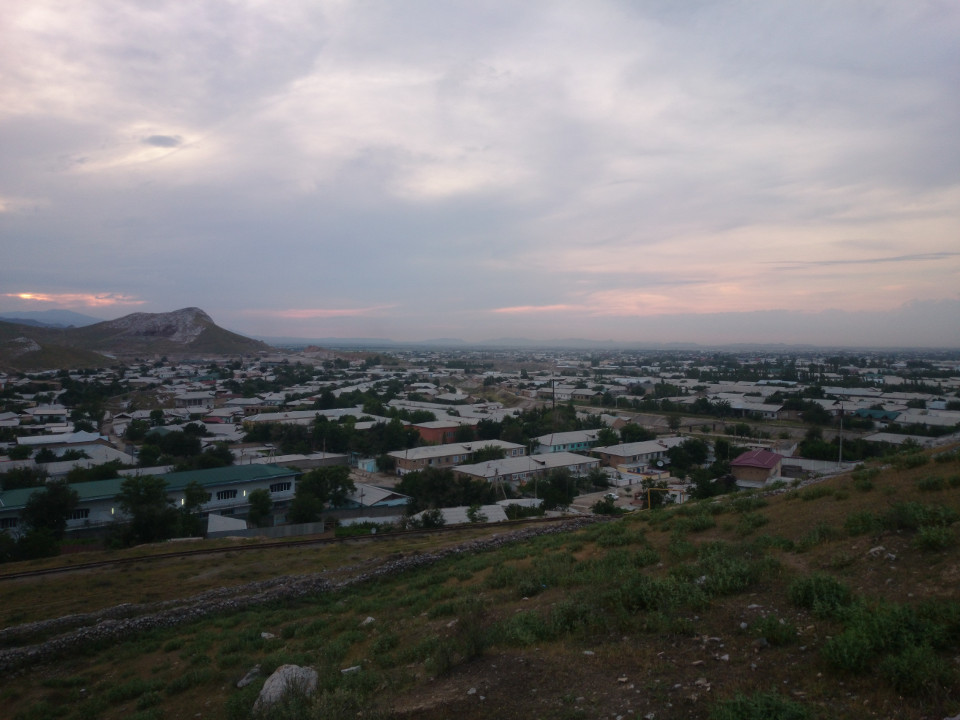 Once in town we met up with Furkat, a local guy Arthur knew. He took us around town, which was nice. We started out at the highest point in the city, which was surrounded by an amusement park. I really am shocked by how common these were in the former Soviet union. After that, the three of us went out to dinner at a local place and had "samsa". This is a local pastry usually stuffed with onions and sheep meat. Pour on some spicy red sauce and it is really good.
 -Dravis
Date: May 12th, 2016
Distance: Rest day
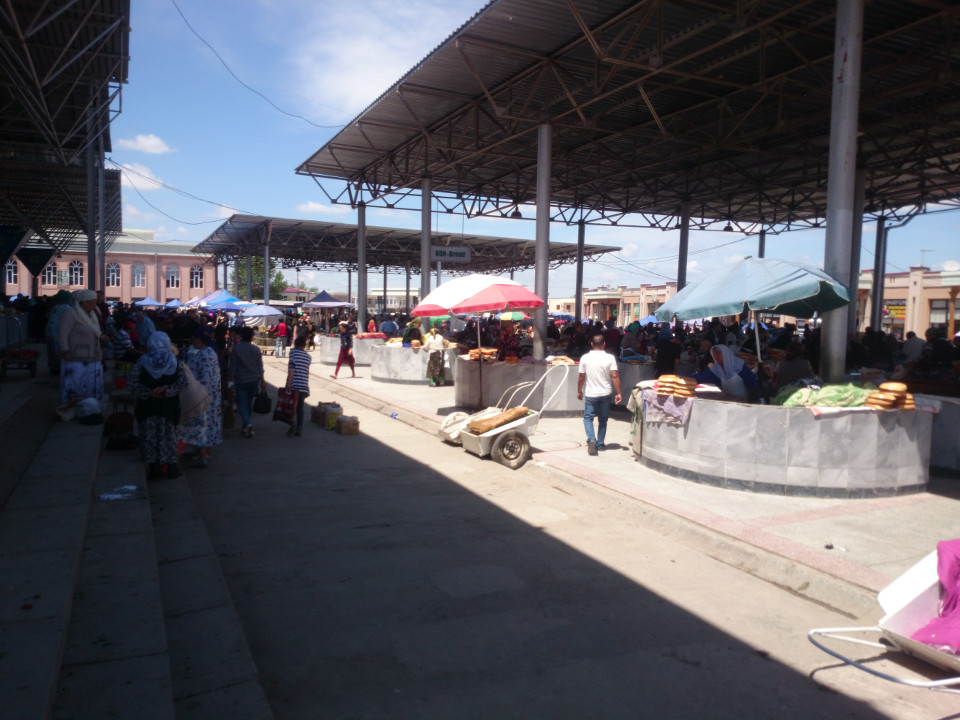 Today was my chance to take in all of Samarkand. It is a good city, but man am I tired. There was so much to look at. Arthur and I started out by heading over to the main bazaar in town. This isn't really a historic place, it's a modern covered market for all kinds of things. The metal and concrete roof structures cover a vast area and, under these covers, local vendors have laid out all sorts of wares. Many are selling handcrafts like hats and scarves. Others are hawking various kinds of locally produced sweets or dried fruit. One area is just for bread. This, really, is where locals come to shop for meat or vegetables. There are also lots of little shops selling imports from China. It's a busy and noisy place.
 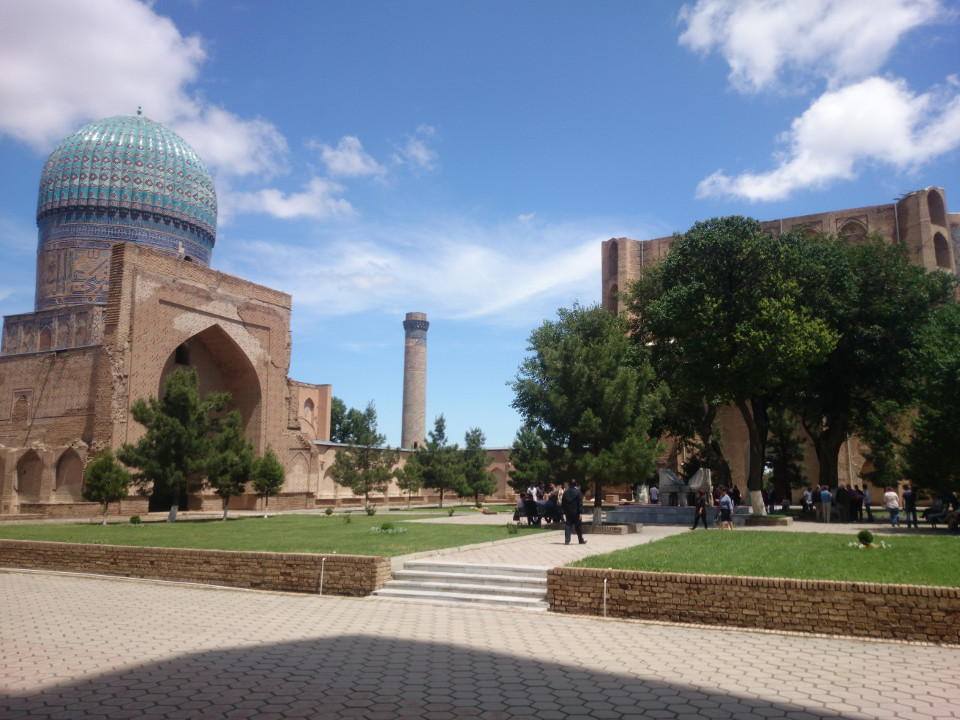 After the bazaar, Arthur and I split up. I headed next door to the Bibi-Khanim Mosque. It's a massive complex built by the Persian conqueror Timur more than 600 years ago. The place was built to show the power and wealth of Timur's empire, and the size is truly astounding. To be standing under the massive archways, you can't help but feel a little bit impressed by it. This size is also a huge problem, however. Not only was it built to the limits of the technology at the time, but Timur also decided to make major changes when the structure was almost complete. This left a large and fragile structure in an earthquake zone. Even in Timur's own lifetime things began to crumble. Architects and engineers tried to reinforce the structure for a few centuries, but eventually the place was left to collapse. Until the 20th century, Bibi-Kahnim was a cracked ruin, looted and abandoned.
 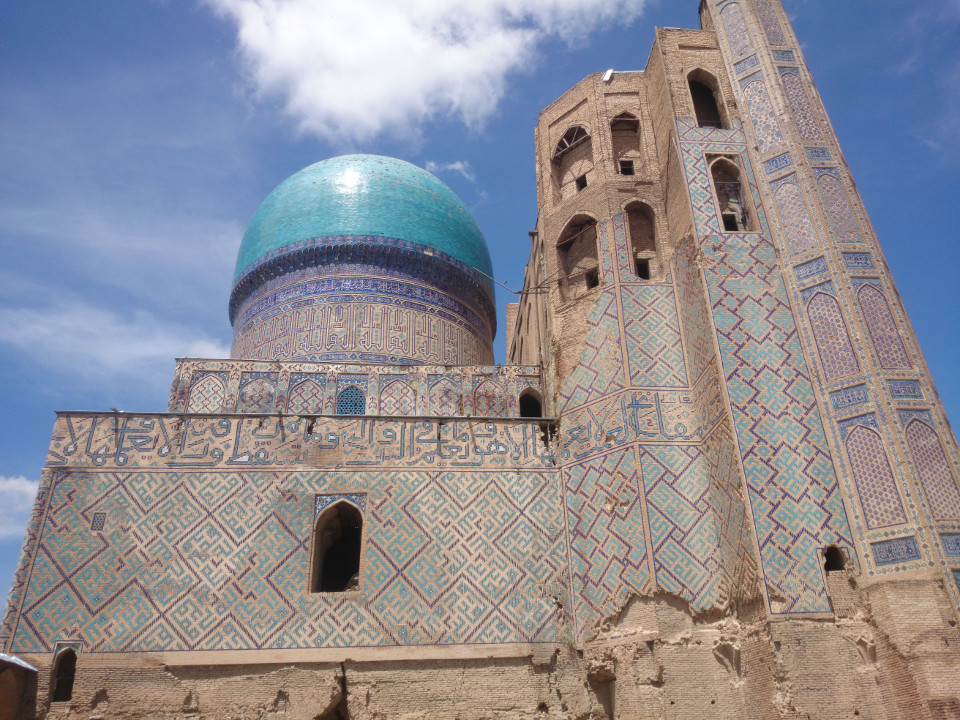 Starting under the Soviet period and continuing today, the structure has been massively restored. The main iwan over the entrance probably looks much the way it did when it was first seen by Timur. The domes have been restored and covered in more fabulous blue tiles. It is a really beautiful place to look at. Inside the complex is a large central plaza, which is a quiet place shaded by trees. It's a good spot to sit and listen to the birds sing. Across from the entrance is a large mosque fronted by another massive iwan. To either side are smaller mosques that are still under restoration. The more I looked around, the more I noticed how much work was going to be necessary to fully restore the place. There are still large cracks in the masonry, some have just been tiled over. Others are patched with a bit of slap-dash concrete. The mosque looks good from the outside, but the interiors are almost all bare brick. The cost of maintaining the place must be enormous.
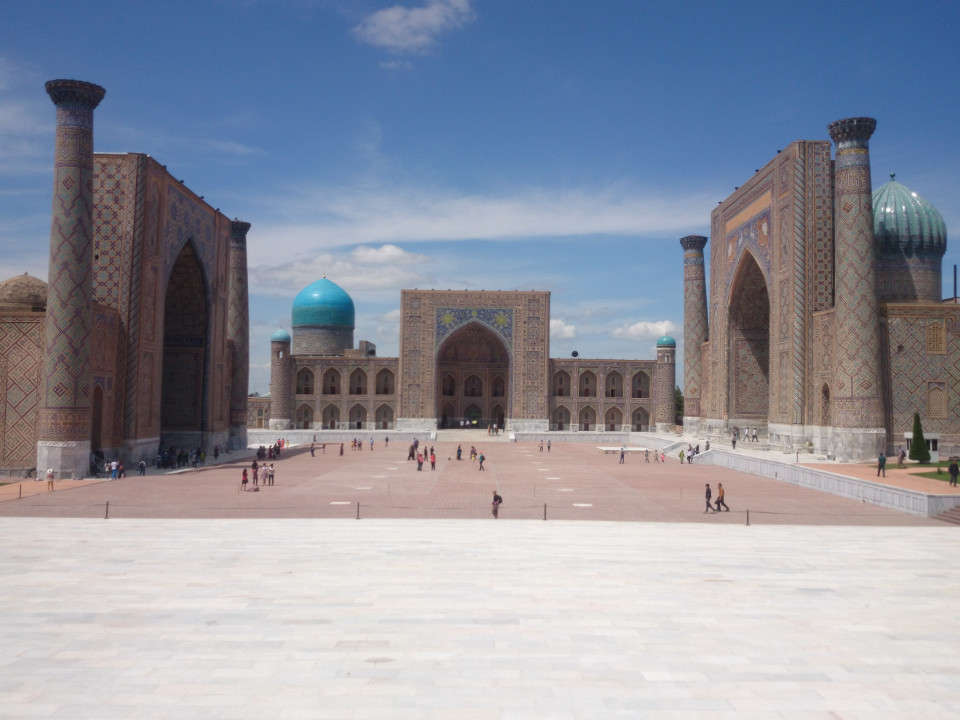 I met up with Arthur back at Registan. Other than a quick peek and an illicit trip to the roof last night, I really hadn't seen the place. The buildings really are quite beautiful. They are covered in amazing tile and brick work. The difference between the drab brick and the glazed tile really stands out under the bright sun. Since the madrasas were no longer in operation, the rooms that used to house students had be converted into little shops. You could find the usual tourist trinkets, but there were also wonderful handcrafts. Beautiful ceramics, both tableware and decorative tiles. There were also soft goods, clothing and embroidery, traditional hats and footwear. I'm glad they're finding new uses for the space. If the place isn't used, it's just going to be a ruin. In fact, looking at older pictures of Registan, it was a ruin through much of the 20 century. It is a bit surprising that it survived the Soviet period. I am glad it did, but it took a massive restoration effort to make things look like they do today.
 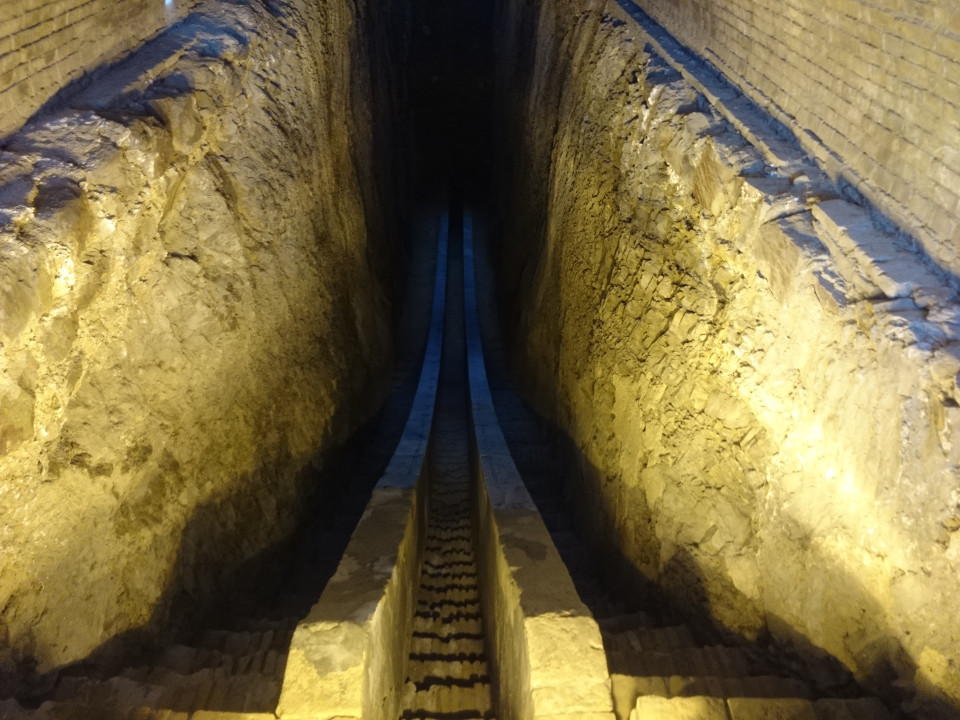 After that, Arthur and I went over to the Ulueg Beg Observitory. This was built just after Timur's death by his grandson Ulueg Beg. He was a sultan, as well as champion of the arts and sciences. He invited mathematicians and astronomers from all over the Islamic world to come and work in Samarkand, which was probably the greatest place of learning at the time. In the 25 years it was operating, the observatory remapped the stars and made great contributions to math and science, most of which wouldn't be known about in Europe for another few hundred years. Not bad for a few guys without telescopes. After the death of Ulueg Beg, the observatory was burned down and forgotten about. Now only a little piece of it remains. Still, it is good to see the place. In the West we tend to think that we invented science, but those ideas were first used in places like Samarkand and slowly moved west. Our modern world owes a great debt to these early pioneers.
 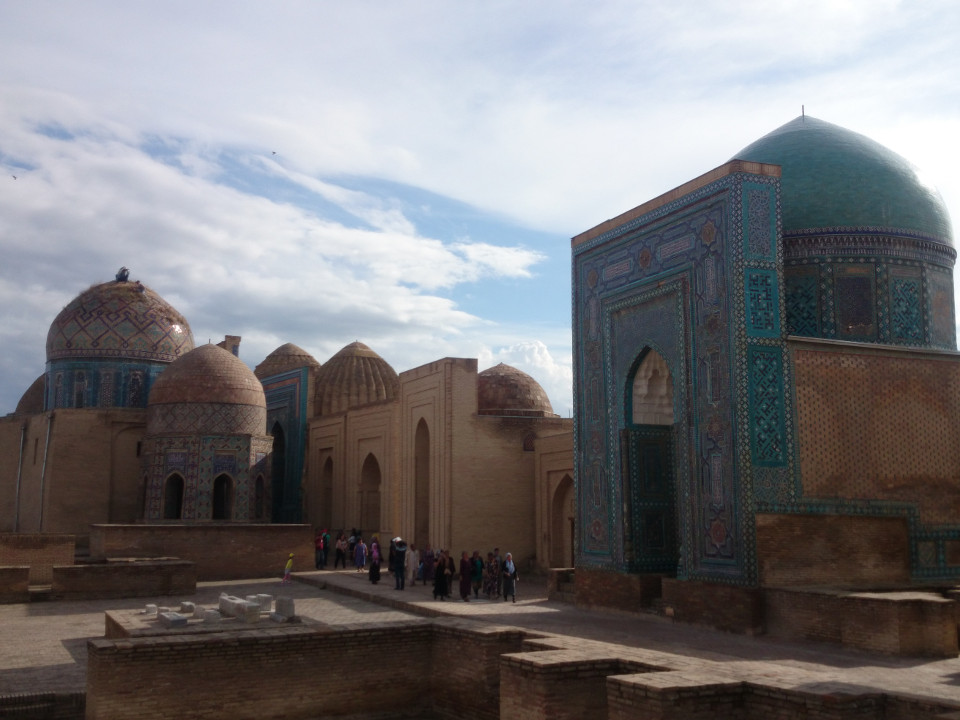 My final stop for the day was Shah-i-Zinda. This is a complex of mausoleums nestled on a steep hillside across from the main bazaar. It's a neat place, but again heavily restored. There wasn't really a museum for it, but several of the spaces that weren't tombs were being used as shops. Inside, you could buy souvenirs, but you could also find pictures of the place as it had looked a century ago. Most of the domes were gone, and the tiles missing. The doors had been bricked over and people would still come to pray outside. Now the place is more tourist friendly, and the domes and tiles have been replaced. If you look carefully you can see what is original and what is new. People still come here to pray, as well. Often they leave a little bit of money on the graves. All of the buildings are set close along a narrow alley, which gives it a more quiet and personal atmosphere than other religious spaces in the city. I found it a nice spot to end the day.
-Dravis
Date: May 11th, 2016
Distance: Rest day
Originally I had wanted to go to see the sights, but the weather wasn't cooperating. It rained all day long. I thought Samarkand was more of a desert, but once again I was wrong. Not that I'm complaining. Instead, I worked on getting some other things out of the way. I can't believe how much of my time on these trips is spent doing logistical stuff.
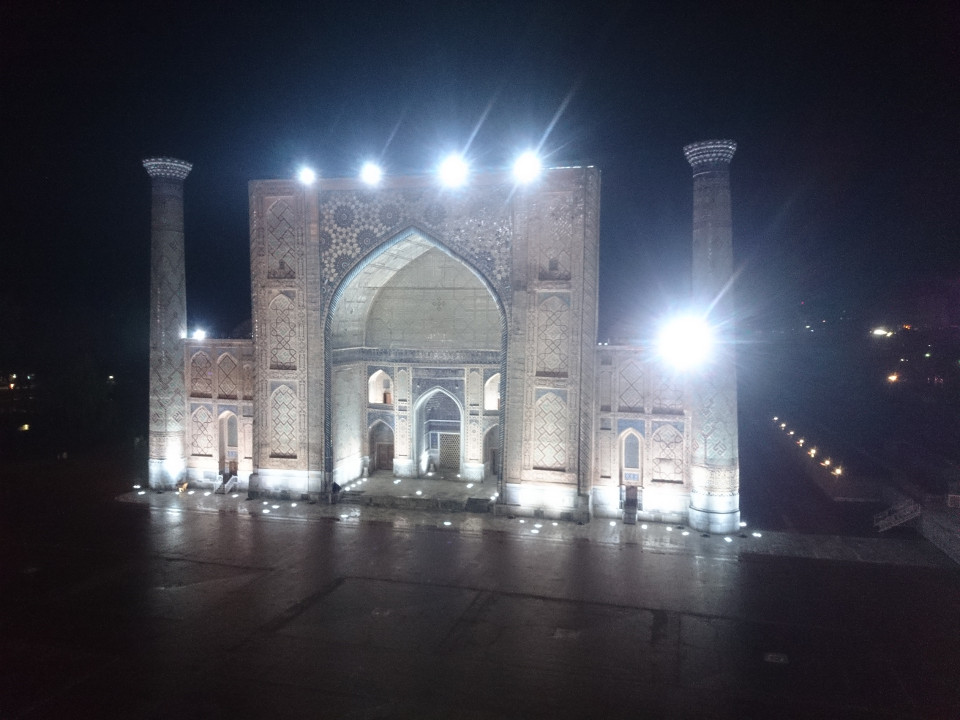 In the evening I accepted an invitation to have dinner with a few other guests at the hotel. It turns out they are engineers from Tashkent doing lighting on the Registan, which is the big complex of madrasas at the center of the city. They asked if I wanted to go see it, so right after dinner we walked over there. They even took Arthur and me up to the roof of Sher-dor. This is strictly off limits to tourists. By the time we got there, the lights were off, though. I figured it didn't matter, it was still a neat place to be. The lighting guys had different ideas. One of them went back and turned all the lights on just for us. Life can take you to some crazy places.
 -Dravis
Date: May 10th, 2016
Distance: 167 km
Song of the Day: Sentimental Guy - Ben Folds
Timur had to get up early for work, so Arthur and I left with him. It was a good thing, because today was going to be a long day. We did a ton of miles, but it wasn't all that exciting, more flat farmland all around. I thought Uzbekistan was going to be more wild and exotic. Instead it looks like a normal place, lots of fields with an occasional village.
Around noon it started raining. Arthur and I were looking for a place to lunch. It took a while, and we thought that we had found one but it turns out that it was just a gas station. Gas stations here only sell gas, you can't even get a candy bar. The guys at the station liked us, though, and invited us in for lunch. They were having peppers stuffed with rice and meat. Yum. Plus, it was good to be out of the rain for a bit.
After lunch it was a slow roll into Samarkand. The wind had picked up a bit. Combined with the rain, it was making everything crawl by. I was glad that we got an early start.
-Dravis
Date: May 9th, 2016
Distance: Rest Day
Today was "Victory Day". The 9th of May is when Germany surrendered to the Soviet Union at the end of WWII. (If you are curious, V-E day is was one day earlier in the U.S. and Europe.) Unlike the US, it is still a big deal in Russia these days. In Uzbekistan, it isn't as important now, but people still do get the day off of work. Many still commemorate the occasion by laying flowers. Malika and Julia, a mother and daughter from dinner last night, took Arthur and me over to the local war memorial in Navoi. There were lists of names for all the people from that region who had died during the war. Over 20 million people from the Soviet Union died during the war, so even this small region of Uzbekistan had a large number of people listed. Many of them weren't more than 20 years old. I am not Uzbek, but the loss of so many fathers and sons is heartbreaking.
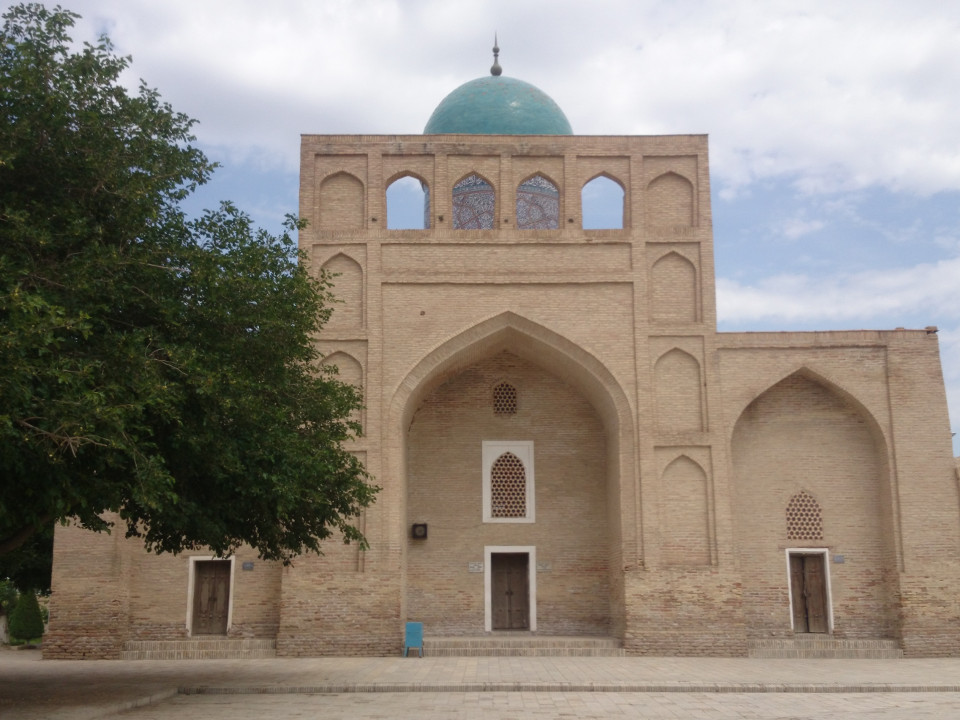 When we finished laying flowers, we met up with Gusele and Georgi, another couple who came to dinner last night. Our little group then walked over to a mosque just down the road. It's the one historic site in Navoi. It was similar in appearance to the structures in Bukhara, tan bricks with a turquoise dome. This was less ornate, but still very beautiful. In one of the courtyards next to the mosque is the mausoleum of a local saint, and, while we were there, a local man came up and offered a prayer. It was done in a simple but beautiful chant. I couldn't understand any of it, but it created a very good atmosphere. After listening to the prayer, some of the locals gave the man a little bit of money, usually 500 som (not more than a quarter in U.S. currency). There are lots of little beautiful local customs that I only get a small glimpse of wherever I go.
 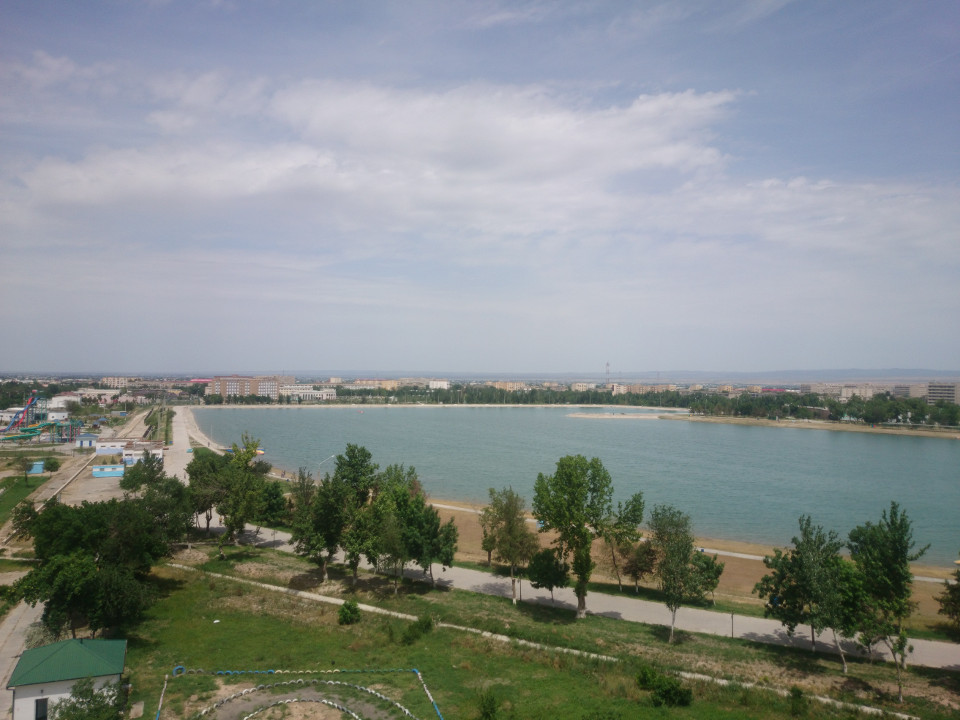 After the mosque, Malika and Julia had to go, but Georgi and Gusele took us over to the center of town. Navoi was built up during the Soviet period because there are gold and Uranium mines in the area. In addition, they built smelting plants, factories for mining equipment, and chemical plants. In short, they created a big industrial city. At the heart of it they put a large park, of which a big portion is a man-made pond. It was a hot day and many people were lying in the sand next to it. There was also a small water park (which wouldn't open for another few weeks), plus a large amusement park. I have seen various places like this in all the former Soviet countries I have been to. (Georgia, Aremenia, Azerbaijan, Turkmenistan, and Uzbekistan.) I had always thought of the Soviet Union as a bleak place. I never pictured it as somewhere for fun or merriment, especially at a governmental level. It was supposed to be somewhere that frivolities weren't allowed, or at least that's how it's always portrayed. I am finding the reality to be somewhat different. I can't say that central planning or collectivization was a good idea, but the Soviets did think about how the people would enjoy their time off. Things were not as boring and dull there as I had grown up thinking.
 By the afternoon, the day was starting to heat up again. Arthur and I had lunch at Timur's apartment. On the television, the Russian channels (which most of them are) were showing the Victory Day celebrations in Russia. There were images from St. Petersburg to Vladivostok. The biggest parade was in Moscow, for obvious reasons. People were walking with pictures of their relatives. Tanks and military vehicles rode through Red Square, military jets and helicopters buzzed overhead. It was quite a spectacle. Still, it was a bit odd. Arthur pointed it out best. He asked me "Why are they celebrating peace with weapons of war?"
-Dravis
Date: May 8th, 2016
Distance: 114 km
Song of the Day: How to Live - Band of Horses
I left Bukhara with Arthur today. I was a bit sad to leave, honestly. Bukhara is a really nice place. I don't know if I will be back this way again, but I am glad I got to see it while I was here.
Outside of Bukhara, there isn't that much going on. This part of Central Asia is pretty darn flat. There are farm fields or orchards with settlements scattered at regular intervals. We passed one town where every 50 feet there was someone selling cherries, so I guess they grow a lot of them around here. Other than that it was just a lot of long, straight miles.
In Navoi, we met up with a local host, Timur, and he took us over to his apartment. It was one building in a complex of Soviet era housing blocks. The trees looked overgrown and the building dilapidated. Inside the apartment, though, it was very clean and modern. Timur's mother was great and cooked a wonderful meal for us. It was "plov" the traditional Uzbek dish. Mmmmmm. I ate until I was stuffed, what a good feeling.
As we were finishing dinner, another group of friends came over. They knew Timur had some guests and wanted to say hello. We ended up chatting with them for a few hours, it was a really lovely evening. Originally Arthur and I had intended to leave the next day, but that would be a holiday and we were invited to see the city. Why not?
-Dravis
Date: May 7th, 2016
Distance: Rest day (38 km)
Song of the Day: Do You Remember - Cumulus
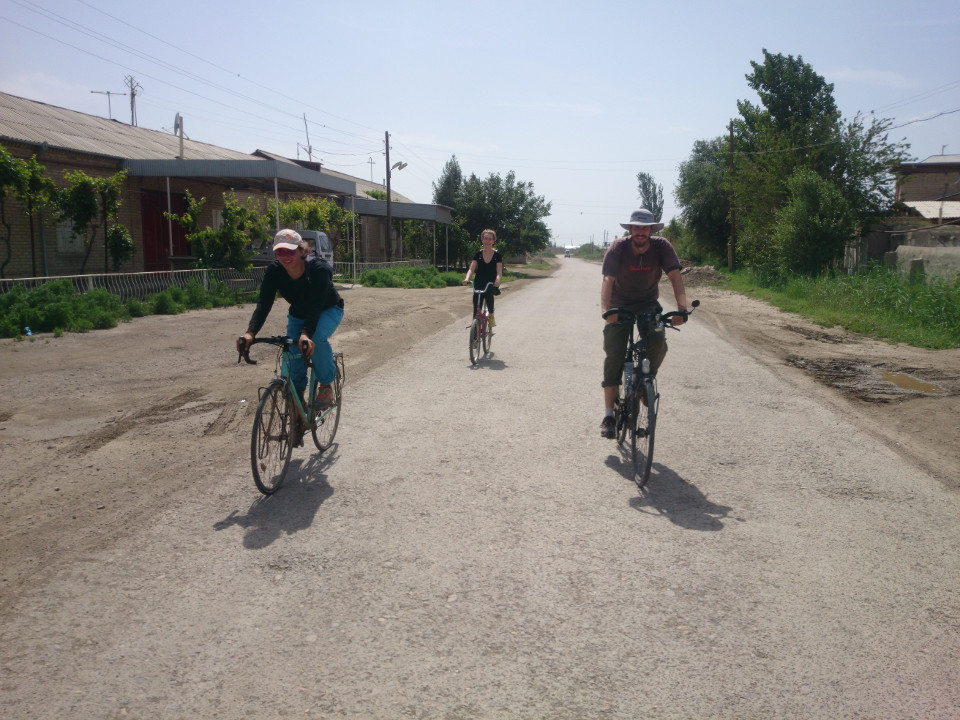 I met up with the group of cyclists this morning. It took a bit to get going. The woman from Japan was there, but her husband wasn't feeling well so they were going to stick around town. She did bring along Linda, a young woman from the Netherlands. At first I was shocked at how far she had come with her bike, it was not in great condition, but it turns out that she was just traveling by bus and train. The bike was borrowed from the hotel. It was only marginally good enough for getting around, as the chain kept falling off. It wasn't a big deal, though, and by the end of the day we had it worked out so getting the chain back on only took 30 seconds to fix.
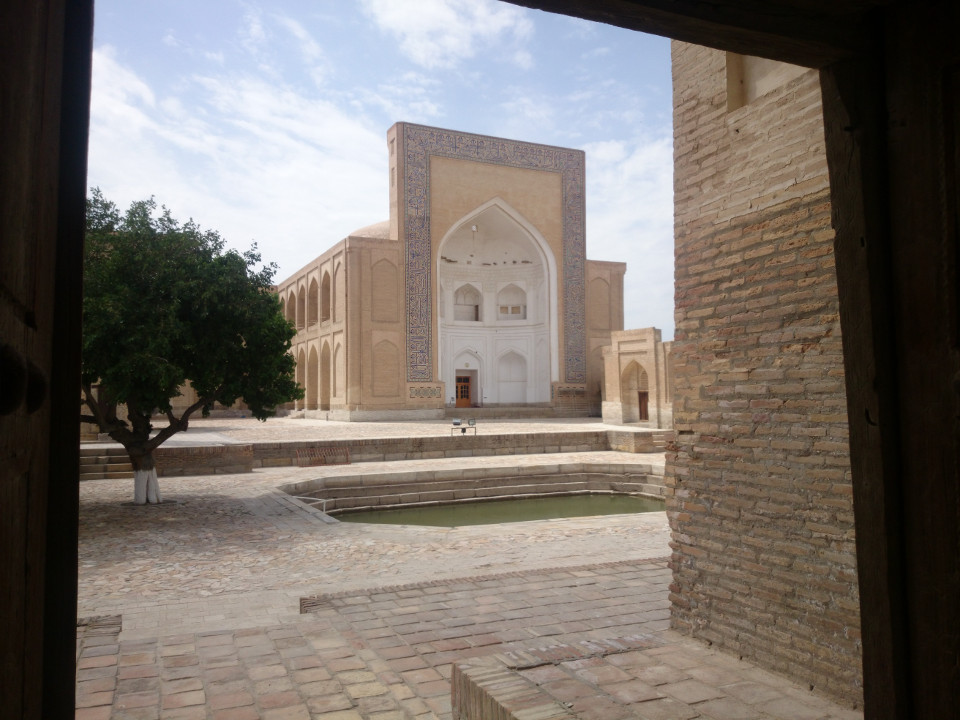 We set off for a site that Alex, the Canadian woman, had seen riding into the city. I think Arthur and I missed it because it had been dark and storming in that area when we were riding to Bukhara. It's only about 7 kilometers outside of town, so it wasn't hard to get to. The place is called Chor Bakr and was a necropolis, but also a madrasa and mosque. I felt like it's similar to a monastery in more western traditions. Architecturally, it was similar to Bukhara, turquoise domes on tan brick buildings. Most of the buildings were situated around a central square with a large pool of green water. A small, crooked minaret stood in front of the mosque. It was a very pretty place to be.
 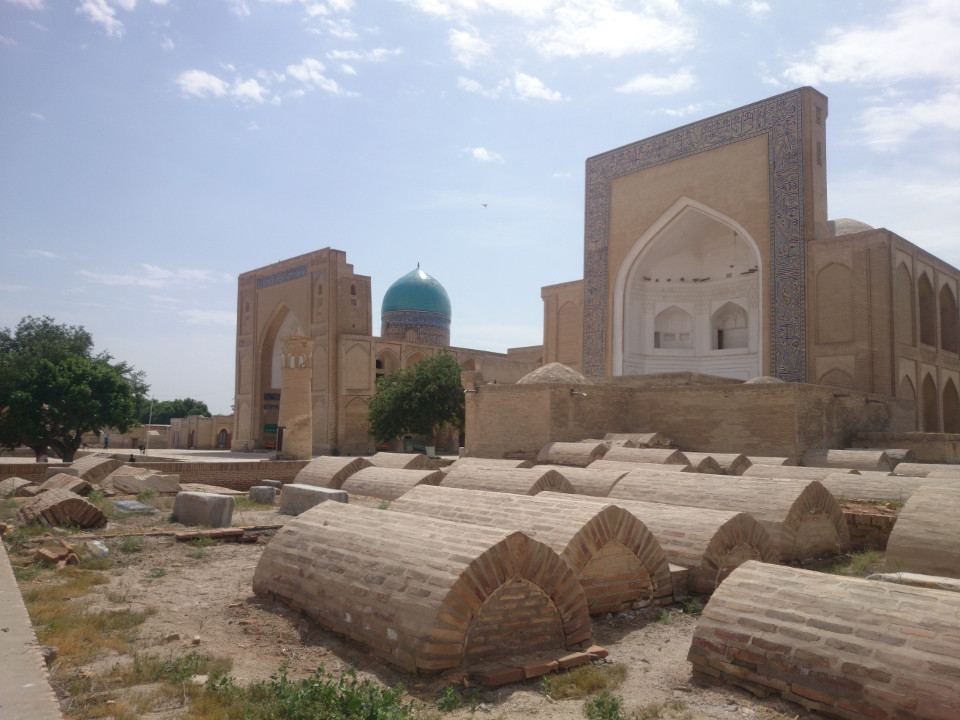 It wouldn't be much of a necropolis, though, without burials. Around the site are various graves. The larger ones are for various religious figures. Usually these had an iwan, or gate, in front of them. Non-religious people were interred here, as well, in order to be laid to rest in holy ground. These smaller graves were just simple brick vaults without much decoration. There were a few other tourists there, but they were outnumbered by the locals, half of which were worshiping in the mosque, and the other half were cleaning or making repairs. (The place is five centuries old, I can imagine what kind of effort it takes to keep it from falling apart.) There were also a few peacocks running around that helped to add an exotic flair to the place. I thought Chor Bakr felt relaxed and authentic. It wasn't trying to be anything special, it just is.
 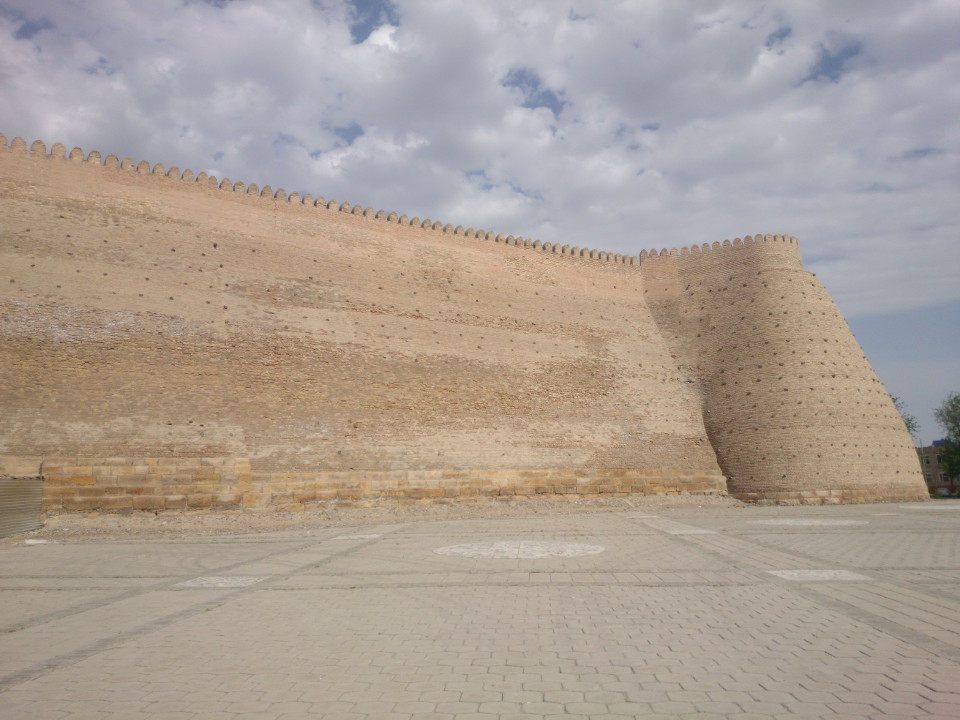 After spending a few hours there, the four of us rode back into Bukhara to visit the Ark, which is the local fortress. It is a huge place, and once the seat of the Kings of Bukhara. The last king was chased out in 1920 after the Bolshevik revolution. The walls surrounding the fort are massive, easily 20 meters high, with round bastions like I have never seen before. The inside of the place actually feels small, though. There are a few buildings and a kind of museum inside, but it ends up being far less impressive than just walking next to the walls. Still, there were a few interesting things. The throne room of the Emirs was neat. Actually, this wasn't a room so much as a courtyard. Supplicants and visitors would have had to stand in the hot sun while the king relaxed in the shade. Underneath the courtyard was the royal mint. I suppose if you are going to be hoarding gold and silver, you might as well do it in a safe place, and what could be safer than right under the eyes of the king?
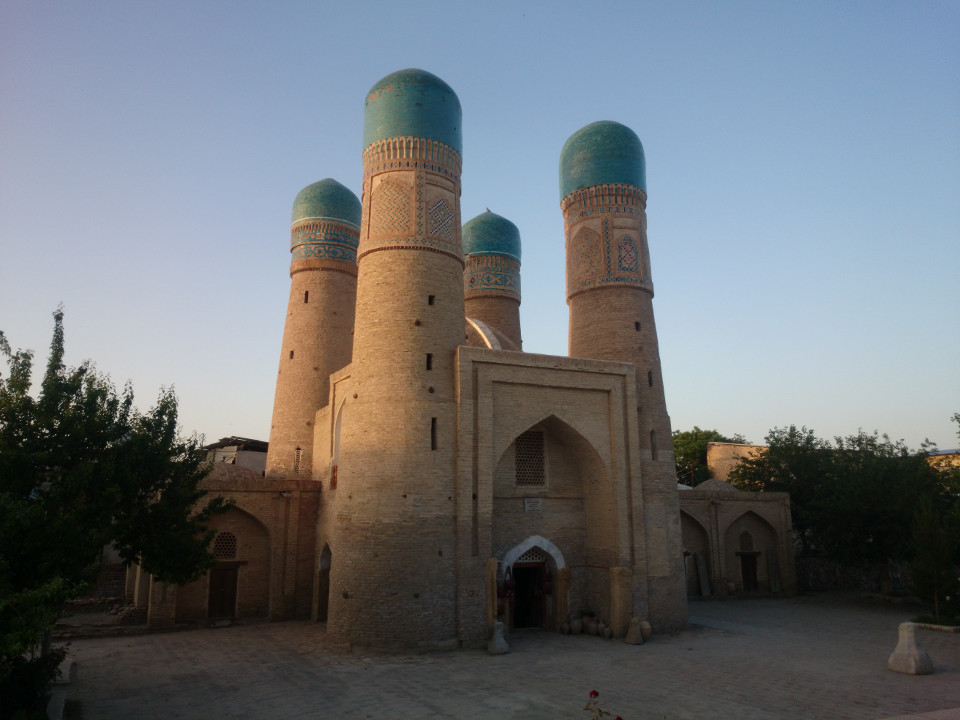 Arthur and Linda, the Dutch student, left to head back to the place they were both staying at, so I left with Alex to go to another famous building in the area, Chor Minar. I think it was once the mosque for a madrasa? Now it is the only part of the complex that remains, with the exception of the gardens. It is tucked back off the main streets down some tiny alley ways, and has a very unusual structure. Most of the buildings here are dominated by their giant iwans or their turquoise domes. Chor Minar, on the other hand, has four towers, one at each corner. Each of these is topped with a turquoise cap. I can't think of a building I have been to that is quite like it. Inside, there is a little shop with embroideries. Heading upstairs onto the roof, the towers provided shade, and the elevation gave a good breeze and a view over that part of Bukhara that was pretty incredible. Alex just graduated with a degree in engineering, so we ended up discussing the structure of the building, then architecture more generally, and onto philosophy and history. While we were chatting, we were joined by Yuka, the Japanese cyclist. She was wandering around and found us by accident. Sitting on the roof and looking out at Bukhara was a fantastic way to end the day.
-Dravis
Date: May 6th, 2016
Distance: Rest day
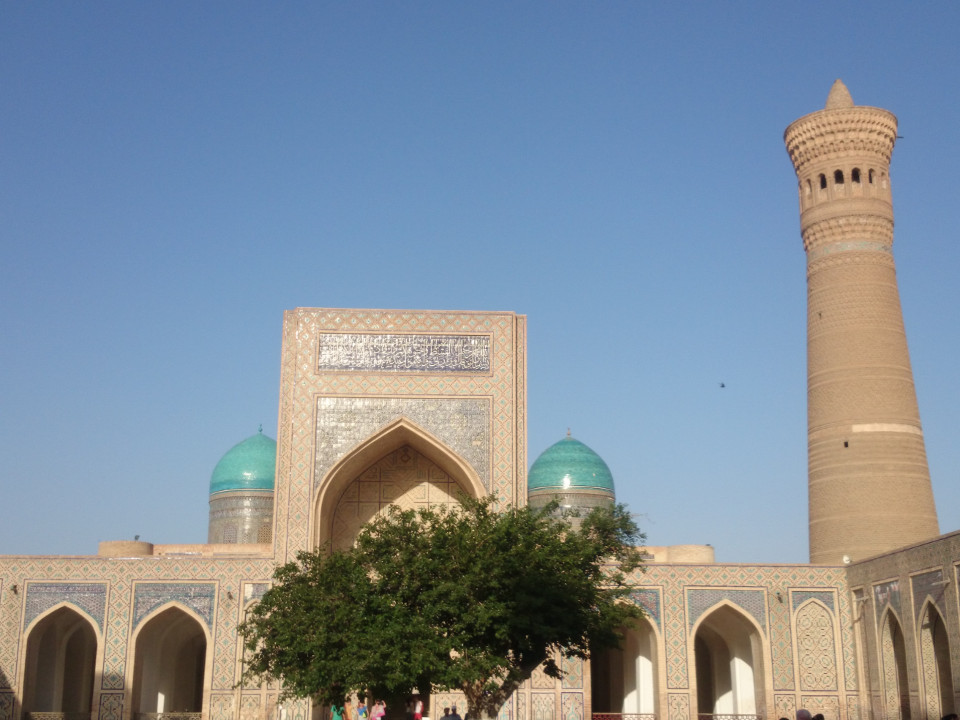 I spent today day walking around Bukhara with Arthur. It was fantastic. Not only is Arthur a cool guy, but the city is amazing. I really didn't know what to expect here, but Bukhara is an amazing, historic city. The seat of kings, the place of temples. In ancient times, these might have been Zoroastrian, Buddhist, or even Christian places of worship. Now they have been replaced with Islamic buildings built right on top of the ruins of the old temples. There is a large and beautiful mosque in the center of the old town, and next to it is a towering minaret. All the domes of the city are covered in this turquoise tile. It's beautiful and like nothing else I have ever seen. Even after all these centuries, it's still making an impression on travelers.
 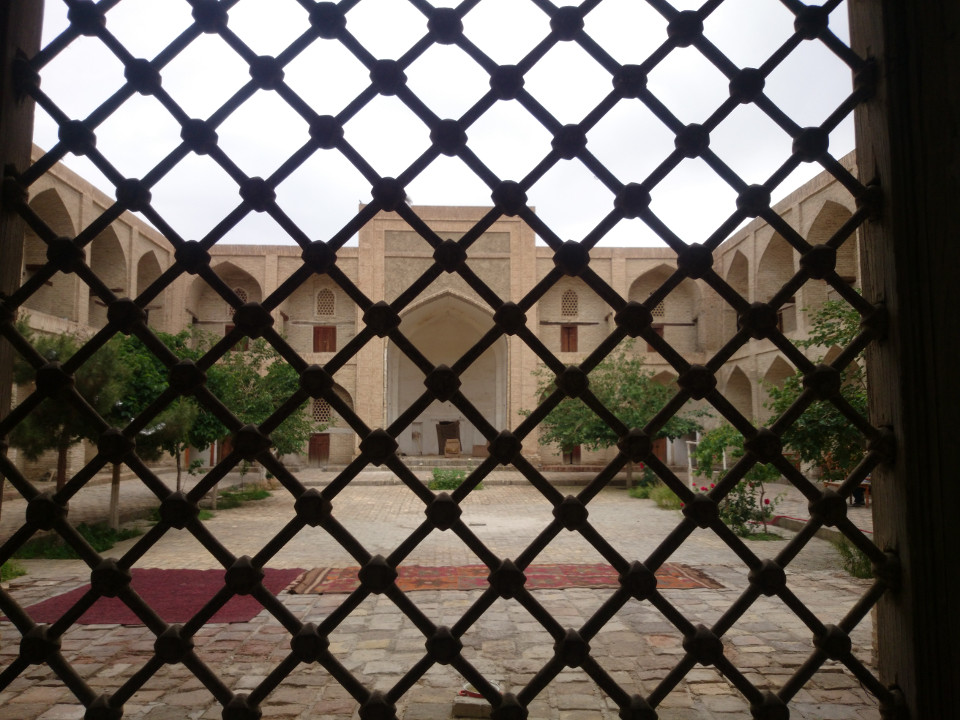 The city also has many other historic buildings, mostly madrasas. It probably has a dozen of those, which is impressive all on its own. These were the universities of the Islamic world. They were places for religious scholarship, but also for scientific learning. Bukhara was like the Cambridge of Transoxiana. Men came from all over the region and even the world to study here. Each madrasa is fronted by an iwan, a Persian style of tall gate or entrance. Each iwan is highly decorated, usually with patterned tiles. Many of the structures are capped with beautiful domes and each dome is covered in a gorgeous turquoise tile, as I mentioned before. They shine bright under the hot sun here and juxtapose well with the tan color of the bricks. This old town is just amazing. I kept thinking to myself that nothing like this exists back home. There was wonderful and exotic architecture everywhere I looked.
 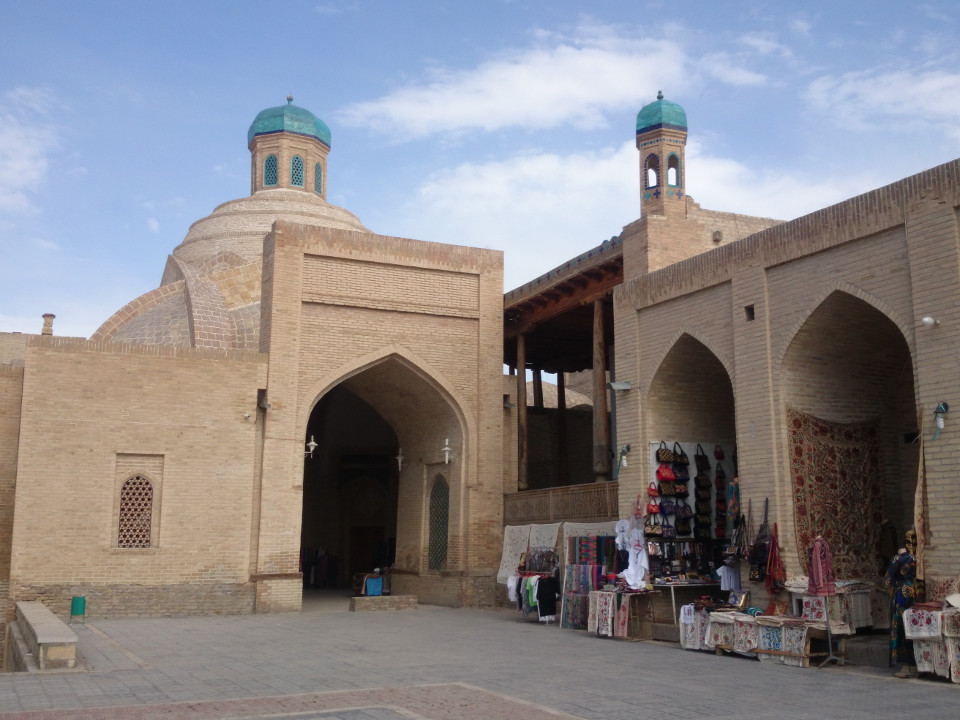 All of that wasn't even my favorite part. Bukhara was a stop on the Silk Road, and more than just students came here. In the past, the city would have been filled with merchants from across Asia. It feels like a camel caravan arriving today would not be out of place, the traders would be right at home in the narrow alleys and the bazaars that line the streets. Those days are long gone, unfortunately, and the foreigners here now are more likely to be European tourists, but the city hasn't lost any of that historic feel. I could walk for hours among the little markets. Craftsmen were working in their shops making products from wood or metal, while other artists would be painting miniatures, or creating works from cut pieces of straw. Not to mention the many other products available, like silk, rugs, jewelry, or ceramics. I'm glad I am on a bike, otherwise I would be loaded down with gifts to bring home. Sorry, friends and family.
 While Arthur and I were walking around, we met three other cyclists. Two were a couple from Japan and India, the other was a Canadian woman living in Switzerland. We had quite a little international group coming along, and we chatted for over an hour in the middle of the bazaar. Like I've said, it's great to find people who are doing what you are. I love sharing stories and hearing about adventures from other people. In the end, we decided to get together the next morning and go for a little ride. Sounds like fun to me.
-Dravis